Strength as Strategy: Why Midlife Training Is Your Longevity Advantage
As more and more women think about long term health, sometimes referred to as healthspan, strength training is getting the attention it deserves. For decades, women have typically been encouraged to focus on cardio, calorie burn, and staying small. Now the conversation is shifting to strength, and I love it! We’re now focusing on building muscle as a way to support metabolic health, stay strong, and preserve independence as we age.
At the same time, much of the advice around strength training can feel overwhelming, and sometimes confusing. There is a lot of content on social media that seems to suggest specific or detailed protocols, and recommendations for lifting very heavy weights without much clarification, with the implication being that if we don’t do things just right, then we’re not going to achieve results . For many women in midlife, especially those balancing work, family, and other responsibilities, that kind of messaging can feel more discouraging than helpful. The good news is that the research actually shows us strength training does not have to be perfect or fit into a precise program to be effective. But rather, relatively simple and consistent routines around strength training may be one of the most valuable things women can do for their health in midlife and beyond.

Why Muscle Matters More Than Most Women Realize

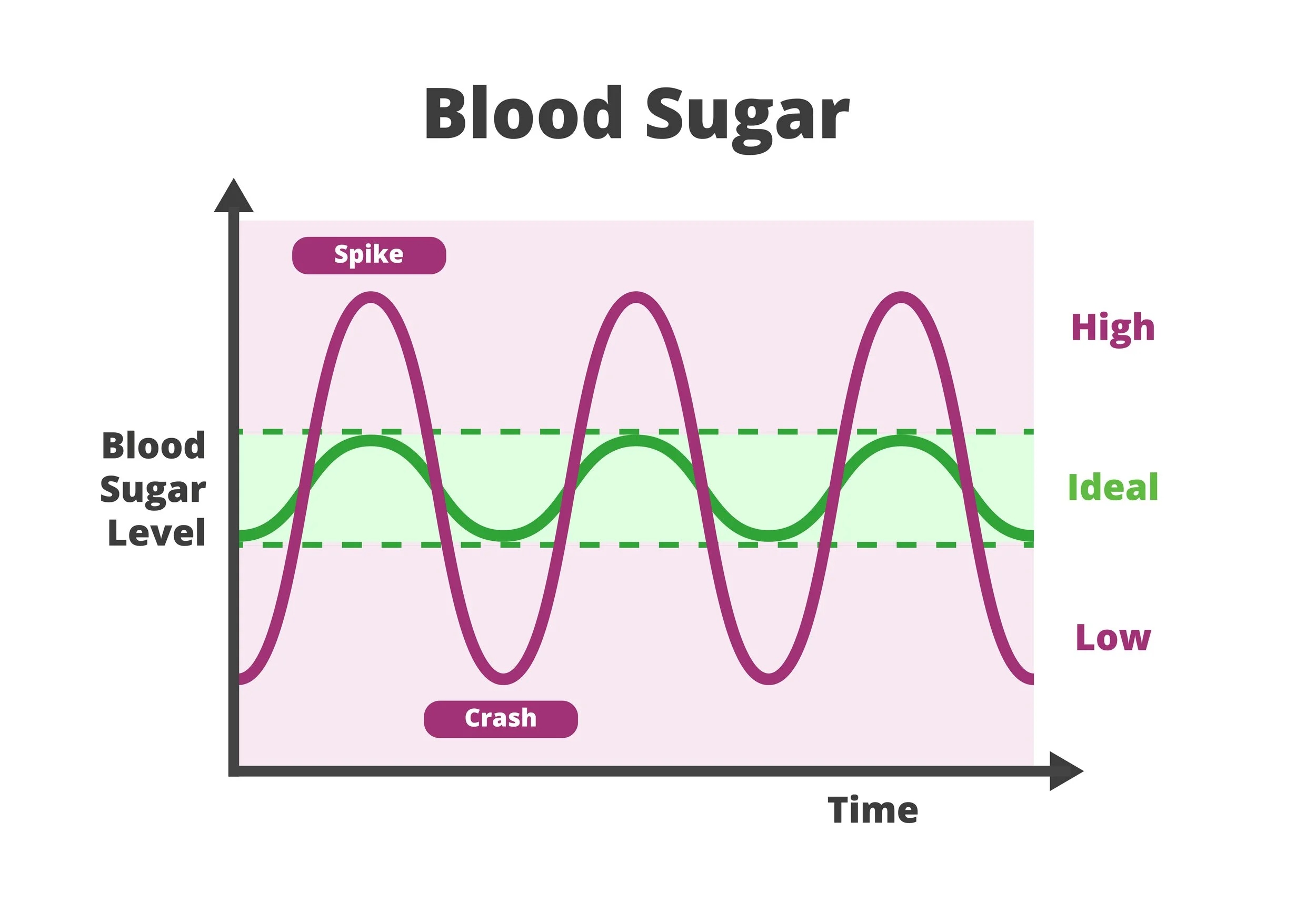
Around midlife, we often begin to experience changes in our body composition, metabolic health (i.e., blood sugar balance), cardiovascular risk factors (such as increasing cholesterol), and sometimes even brain health. These changes most often occur even when nothing in our routine changes. Same diet, same exercise, but now there’s belly fat and high cholesterol. Completely unfair! And these changes, without the right interventions, can lead to increasing inflammation and insulin resistance, both of which are major risk factors for chronic diseases like heart attacks (the number one cause of death in women), Alzheimer’s disease (which affects women at about twice the rate of men), and cancer.
Which brings us back to muscle, and why I care about muscle.
Muscle helps counter many of these changes. One of its most important roles is in glucose regulation. Muscle is the primary site of glucose uptake in the body, meaning it helps move glucose from the blood into cells, where it can be used for energy. With regular muscle contraction, the body increases activity of GLUT-4 transporters, which help shuttle glucose into muscle independent of insulin. This supports insulin sensitivity, or how well the body responds to insulin. Being insulin sensitive is a good thing, and is foundational for metabolic health and metabolic flexibility, which lowers risk of chronic disease.
Muscle is one of the body’s most powerful metabolic organs. With each contraction, it releases myokines, which are signaling molecules that help regulate inflammation, improve insulin sensitivity, support recovery, and influence brain health. Different myokines have distinct roles, from enhancing glucose uptake into muscle, to modulating immune and repair processes. This is why muscle is so central to long term health, it’s actively shaping how your body functions, not just how it looks or moves.
Why Strength Training Is Essential for Long Term Health and Independence
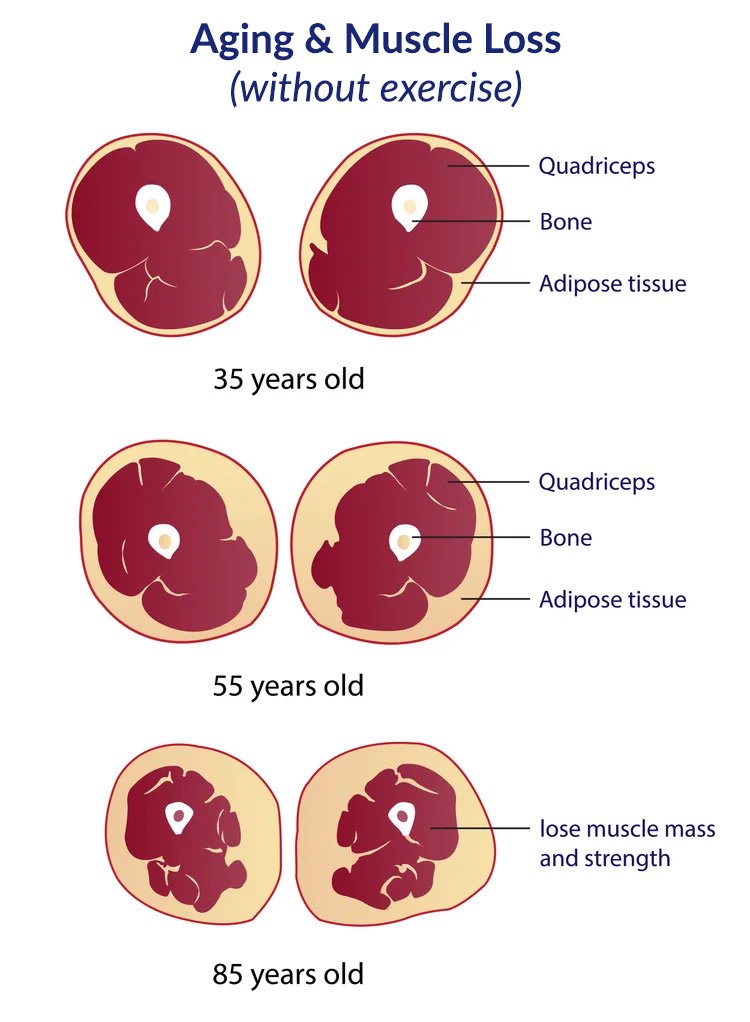
The everyday tasks we often take for granted, like carrying groceries, getting up from the floor, climbing stairs, and catching ourselves when we stumble, all depend on strength. And these abilities become increasingly important (and often more difficult) as we age. Without sufficient strength, these tasks become harder, and the ability to live independently and move with confidence in our later years can diminish.
And unfortunately, muscle becomes harder to build with age. This is in part due to anabolic resistance, meaning the body becomes less responsive to the usual signals for building muscle, like dietary protein and strength training.
This is why we want to think about muscle today. Muscle is also easy to lose during stretches of relative inactivity, whether from injury, illness, recovery from surgery, or simply a season of life that requires focused attention on family or other priorities. Because of this, I like to think of muscle as something I build to have in reserve for the times I can’t predict, but that are inevitable, when I won’t be able to maintain my usual routines. Building muscle now is not about how you look, it’s about creating a reserve that supports you well into older age. But feeling strong is pretty great.
What Actually Builds Muscle
At the most basic level, building muscle comes down to resistance training and adequate protein intake. The formula is simple, even if it does require intention, effort, and consistency. In other words, you need to challenge your muscles enough to stimulate adaptation (change), and then provide your body with the nourishment needed to recover and rebuild.
From what I’m seeing and hearing from patients, much of the current conversation around strength training overcomplicates this. Many women hear messages about needing to lift heavy in a way that feels intimidating, train to failure (which may increase risk of injury), or follow precise recommendations for sets and repetitions that do not always fit into real life. While some of these strategies may be useful, particularly for women with specific fitness or athletic goals, they are not the only path to achieving the strength and other benefits that increasing muscle mass can offer for healthspan.

In March 2026, the American College of Sports Medicine released updated strength training guidelines based on a review of 137 systematic reviews involving more than 30,000 participants. The overall conclusion was clear: what matters most is consistent effort and progressive overload.
This is simple. Choose your reps, choose your sets, just show up again and again.
Progressive overload simply means challenging your muscles enough to prompt them to adapt over time. Namely, gradually increase the weight you’re lifting or the number of repetitions you’re completing. To be clear, this does not mean you should be leaving your workouts feeling depleted. On the contrary, the evidence suggests that reaching near failure (rather than true failure, where you physically cannot do another rep) is enough to improve strength and muscle mass.
The research also suggests that completing just two sets of a given exercise can improve strength and muscle size. Of course, more than two sets per muscle group may offer additional benefits, but with diminishing returns.
And most encouraging, resistance training appears to be safe and effective for healthy adults of all ages, including older adults. So while it may be more difficult to build muscle and strength as we age, it is still safe and may very well protect the muscle (and bone) that we do have.
Why Strength Is Not Enough: Power Matters Too
There is also some useful nuance in the conversation around strength training. If the goal is increasing muscle size, technically called hypertrophy, the two main drivers are training volume and time under tension, particularly during the eccentric (lowering) phase of a movement. Higher volume, often defined as around 10 sets per muscle group per week, tends to support building muscle. Eccentric loading refers to the portion of a movement where the muscle is lengthening under load, like lowering a dumbbell during a bicep curl.
Power is a bit different, and is equally important. Power is the ability to generate force quickly, and in everyday life this matters, especially when we think about maintaining confidence and independence into our 80s or 90s (if we are so lucky). Strength gives the body the capacity to move, but power determines how quickly you can use that strength. For example, it’s power that helps you catch yourself when you slip on a wet floor, regain your balance after your dog runs into your leg, or react quickly on uneven ground.
To improve power, the research supports using moderate loads, lower total volume, and focusing on speed during the lifting phase of a movement. This might look like a fast sit-to-stand, a kettlebell swing, or a medicine ball throw.
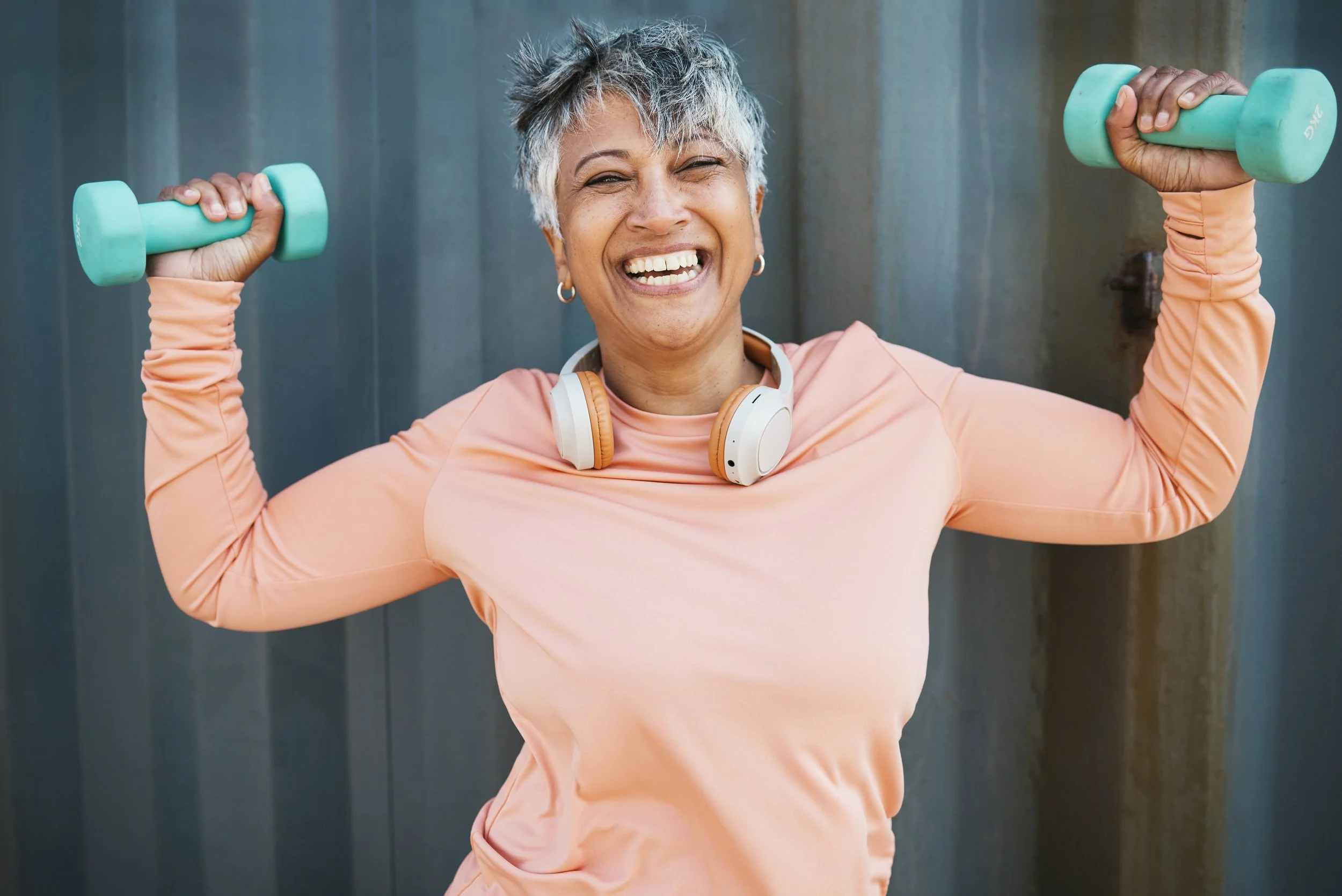
So our exercise routines need variety. We don’t need to lift heavy weights to failure for four reps (although sometimes that’s fun). But we do need to move. We need to move different weights, at different speeds, in different planes and patterns, to keep our musculoskeletal system adaptive and responsive. And ideally, we find a way to do this that feels enjoyable and allows us to leave our workout feeling better than when we laced up our shoes.
What Does This Mean for You?
The most important takeaway is that you do not need a perfect program to benefit from strength training. You do not need to train like an athlete or follow detailed (and often overwhelming) advice on social media.
You need training that feels challenging enough to stimulate change, realistic enough to fit into your life, and sustainable enough to continue over time. Consistency is what matters most.
Find exercises you enjoy. Push yourself, but not to extremes. Don’t worry too much about hitting perfect numbers. Just keep showing up. Over time, that is what makes the biggest difference.
Conclusion
Strength training matters in midlife because muscle matters. It supports the predictable physiological changes that occur during perimenopause and beyond, and allows us to take some control over those changes. Muscle improves blood sugar balance, insulin sensitivity, metabolism, and cognitive health, while helping to preserve our option for independence as we age.
For women who want to feel strong, capable, and well for as long as possible, strength training is not an optional background activity. It is one of the most valuable investments you can make in your future health.
If you’d like support with this
If you’re ready to think about strength training in a more supportive, realistic, and health-focused way, you don’t have to figure it all out on your own. Building muscle in midlife is not about chasing perfection or following rigid rules. It’s about finding an approach that works for your body, your goals, and your life.
Get in touch with us at amynettmd.com, and let’s talk about creating a plan that feels practical, sustainable, and aligned with your long-term health goals.