It’s Not Your Fault: Why Perimenopause Can Raise Cardiovascular Disease Risk When You’re Doing Everything Right

It might be a more common conversation than you think.
The appointment begins, and almost immediately, I can hear the conviction mixed with frustration, and sometimes even disbelief. My patient begins assuring me, she’s following the same healthy diet, the same routine that includes regular exercise, and she’s still doing her best to prioritize sleep. Sure, maybe there’s more stress than she would like, but overall, it just doesn’t seem like anything is that different. Same diet, same routine, but her cholesterol has increased noticeably, and my favorite marker to track, Apolipoprotein B (ApoB), has moved quickly from optimal to high.
I listen, and while I don’t want to interrupt, I also know already that this isn’t her “fault.” This doesn’t reflect an unhealthy diet or lack of discipline. At some point I do jump in, because it’s so important to know that the hormonal changes around the menopausal transition may cause hot flashes for some women, irritability or anxiety for others, and for many, an increase in lipoproteins that really has very little, if anything, to do with diet or lifestyle.
This can be especially confusing for women who are already active, eating well, and doing many of the things they’ve been told should protect their cardiovascular health.
High cholesterol doesn’t mean you’ve failed. It doesn’t mean you’re doing anything wrong.
It is a predictable physiological shift that we can anticipate, and most importantly, that we can address.
First, to lay some foundations:
When we talk about cardiovascular disease (CVD), we’re mostly talking about heart attacks and strokes.
Heart attacks and strokes essentially result from the buildup of plaque (atherosclerosis) in the arteries of the heart and brain, respectively. And when that plaque prevents normal blood flow to the tissue it’s supplying, that tissue dies.
It seems that most of us associate CVD with men. And maybe that’s because we do see more younger men having serious heart attacks when compared with younger women. The tragedy of seeing someone knocked down in their prime often stays with us more.
But importantly, cardiovascular disease is the leading cause of death for women, just as it is for men. And while younger women are often relatively protected compared with men, that protection narrows after the menopause transition as cardiometabolic risk rises.
While this is something that’s been known for some time, I was excited to see a recent publication in the prominent journal Menopause clearly acknowledge that “the menopause transition represents a critical window for cardiometabolic risk identification and prevention.”
And even further, the recommendation is to consider menopause itself a risk factor when assessing overall CVD risk.
I think this properly acknowledges the important role that physiologic changes play in CVD risk.
Why Does Cholesterol Change During Perimenopause And Menopause?
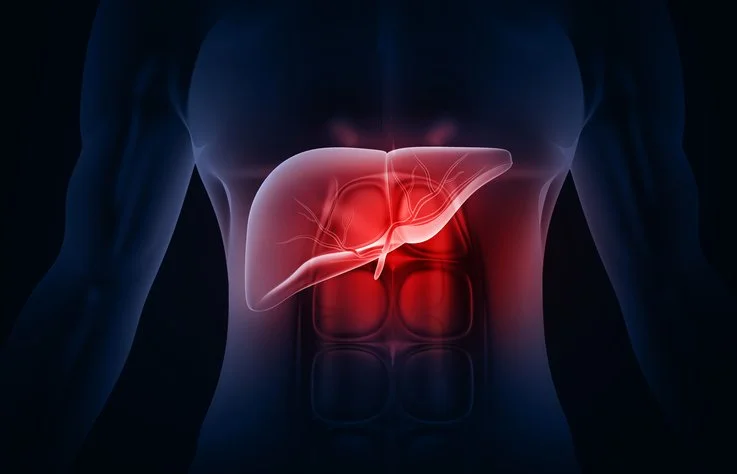
To understand why cholesterol shifts during perimenopause, it helps to know that the liver plays a dual role: it both makes cholesterol and clears it from the bloodstream.
Estradiol, your primary estrogen, helps the liver do its clearing job well. When estradiol levels are higher, the liver expresses more LDL receptors, which act like docking stations that pull LDL cholesterol and ApoB-containing particles out of circulation. As estradiol declines during perimenopause, the number of these receptors decreases, and LDL clearance becomes less efficient. The result is that LDL cholesterol begins to rise, not because your diet changed, but because your liver's ability to remove it has.
At the same time, the liver responds to falling estrogen by increasing cholesterol production. So you are dealing with a double shift: less clearance and more production, happening simultaneously.
This shift tends to accelerate in late perimenopause and early postmenopause, which is why this is the time to pay attention, even if you feel fine and your lipoprotein levels have always been perfectly normal.
And What About HDL?
Something I hear commonly is, “But look at my HDL, it’s so high, and that’s the good cholesterol, right?”
Yes, and no.
HDL cholesterol can reflect particles involved in anti-inflammatory activity and reverse cholesterol transport, which helps move cholesterol away from the artery wall and back to the liver for processing. But the problem is that standard labs can’t tell how much of a person’s HDL is functional and how much is dysfunctional.
Research has confirmed that HDL is more complicated than it appears on a standard lab panel. In the ILLUMINATE and AIM-HIGH trials, medications that raised HDL cholesterol didn’t decrease CVD risk. So a higher HDL on your lipid panel doesn’t tell us whether that HDL is actually working.
During the menopausal transition, HDL can also become less predictably protective. HDL cholesterol may stay high, or even rise, while HDL particle function may shift in ways that are less anti-inflammatory or less effective at reverse cholesterol transport.
And HDL is not the only thing quietly shifting during perimenopause.
What Happens To Blood Pressure?
Hypertension, or high blood pressure, is another risk factor increasing the probability of a heart attack or stroke. And after 60 years old, almost 70% of women have high blood pressure. While some of the risk comes from age-related changes that are likely independent of hormonal changes, there are also well understood mechanisms of hypertension driven by lower estrogen levels.
The takeaway is that blood pressure during perimenopause deserves the same attention as your lipid panel, even if your numbers have always been fine.
The Dreaded Belly Fat!
Here is the honest and unfair truth: our body composition changes during perimenopause. I wish I could tell you otherwise, but women experience increases in total fat mass during this transition, most notably visceral adipose tissue, more commonly known as belly fat.

Visceral fat is the fat that accumulates around your abdominal organs, and it behaves very differently from subcutaneous fat, the fat that sits just beneath your skin.
Visceral fat is significantly more inflammatory, and it deserves its own blog post. But for now, the key thing to understand is that visceral fat is metabolically active in ways that work against you. One of the most important ways it does this is by increasing insulin resistance.
In simple terms, insulin resistance means your cells do not respond to insulin as easily as we want them to. Instead, your body has to produce more insulin to do the same job, and higher insulin levels can further encourage fat storage, particularly around the abdomen.
Increased visceral fat and insulin resistance together raise your risk of cardiovascular disease, type 2 diabetes, and cognitive decline. And because estrogen has a protective effect on insulin sensitivity, its decline during perimenopause is part of what sets this process in motion in the first place.
In line with these changes, triglyceride levels often rise as well. And even though triglycerides appear on a standard lipid panel, I find them most useful for understanding your insulin sensitivity rather than just another lipid number. In my practice, I love to see fasting triglycerides around 50 to 60. When they climb above 100, that tells me we need to think seriously about improving insulin sensitivity and metabolic health.
But here is the most important takeaway: while these shifts in body composition are real and common, they are not inevitable. In fact, VO₂ max, strength, and lean mass are some of the most modifiable markers of aging we have. With the right training and nutrition, many women can preserve a level of metabolic fitness that is far younger than their chronological age. So do not throw in the towel! Just know that during this transition, intention matters more than it used to.
So What Do We Do With All of This?
Knowledge is the starting point, but it is not enough on its own.
If you are an active woman moving through perimenopause, you may already be doing more than most. You train. You watch what you eat. You take your health seriously. And you may still find that your labs are moving in a direction that feels unfair and confusing. That is not a reflection of your effort. It is a reflection of your physiology, and it deserves to be taken seriously rather than dismissed.
The women I work with are not looking for someone to tell them to exercise more and eat less. They are already doing the work. They are looking for someone who understands that the rules change during this transition, and that staying ahead of cardiovascular risk requires a more nuanced approach than the standard advice often provides.
Perimenopause is not a reason to panic. It is a window of opportunity.
If your cholesterol, ApoB, blood pressure, body composition, or blood sugar markers are changing despite consistent nutrition and training, this is worth understanding. Let’s look at the full picture and build a plan that fits your physiology, your goals, and the way you actually live.