
GLP-1s: Know What You're Actually Signing Up For

GLP-1 medications are everywhere right now. You’ve probably heard the names Ozempic, Wegovy, Mounjaro, Zepbound, semaglutide, or tirzepatide, and maybe even some of the medications still in clinical trials, like retatrutide. These drugs have gone from a quiet diabetes therapy to the most talked about thing in medicine within the span of only a few years.
It would be easy if I could tell you, “Yes, we should all be on GLP-1s! Let’s just put them in the drinking water.” Or, “Yikes, only if you meet the criteria for clinical obesity should these even be considered.”
But unfortunately, these medications, and your health goals, are far too nuanced for an easy answer.
So let’s look a little more closely at what we know, what we don’t yet know, and when to think about these as a valuable tool in your health journey.
Here’s what feels most clear to me: for someone who is carrying a solid muscular frame, and also carrying enough excess fat that it’s clearly working against their health, whether through insulin resistance or cardiovascular disease risk, and they accept that this medication may be a lifelong commitment, this feels like an easy ‘yes.’
But among the people now asking about GLP-1s for optimization, longevity, or modest body composition goals, that is only one part of the conversation.
There's a growing case that GLP-1s could help people with more modest weight loss goals as well, and some early research raises the possibility that they're anti-inflammatory even outside of obesity. Other research shows a mixed signal on Alzheimer's with a major trial just failing to slow progression in people already showing symptoms, while another trial showed real promise when looked at earlier in the disease. Nothing definitive yet, but something exciting.
I'm not opposed to using these medications in such settings. For example, someone who has painstakingly tried to lose 20 lbs over the past couple of years, but the scale doesn’t budge. Or someone with a strong family history and fear of Alzheimer’s who is managing all the other known influences, and wants to add just one more possible layer of protection. I understand these concerns, and they’re valid.
But we need to be honest that we don't yet have the data to give someone with no metabolic disease a real informed consent conversation about what this drug is doing to their underlying biology long term. "It worked and I feel fine" isn't the same thing as understanding the mechanism in a body that wasn't dysregulated to begin with.
I enjoy working with my patients as partners in their health journey. And while I have to practice medicine in a way that resonates with me, feels ethical, and largely evidence based, there are times when I support patients who make informed decisions, even when those decisions might be different from my own.
So in full transparency, I personally have not tried any of the GLP-1 medications, but I have prescribed these for people who have a compelling reason outside of the FDA-approved guidelines, and who acknowledge, we don’t have a full picture of how these medications influence physiology in well-regulated, metabolically healthy systems.
When Willpower Isn’t Enough.
First, I want us all to be on the same page (as much as is reasonable). So I hope we can agree that excess weight is not a failure of discipline or a sign of weakness.

Being overweight or obese rarely results from a single thing gone awry. Weight regulation is complex and deeply individual with influences from genetics, food environment, gut hormones, sex hormones, sleep, stress, muscle mass, medications, gut-brain signaling, and social factors (I probably even missed a few).
I think if we take an honest look around, we’ll see that some people eat processed foods with little thought to nutrition and somehow stay lean. Others count calories and focus on nutrient dense foods, but still easily layer on weight even with such careful attention. And others feel driven by hunger, cravings, or food noise in a way that I’ve heard described as exhausting and nearly impossible to ignore.
So our weight is more than calories in versus calories out.
At the same time, calories do matter. Calories are energy, and long term changes in body mass cannot be separated from energy balance. But, perhaps frustratingly, energy balance is not an equation solved by willpower. Our hormones and physiology strongly influence how hungry we feel, how satiating our meals might be, and how difficult it is to maintain a lower weight.
So all these things matter: Food quality, protein, strength training, sleep, blood sugar balance, and movement routines.
But for many people, while these are necessary pieces of the equation, they are not sufficient to solve the problem of excess body fat.
That is where GLP-1 medications have changed the conversation. They give us a way to address some of the biology driving appetite, food intake, blood sugar, and body weight regulation.
You can absolutely skip this section if you’re here for the big picture conversation. But if you’re interested, I think a basic understanding of the mechanism can be helpful, because each of the GLP-1s has some unique layers of affecting your physiology.
First, the class of medications we’re talking about are GLP-1 receptor agonists (GLP-1 RAs, or GLP-1s). GLP-1 refers to glucagon-like peptide-1, a gut hormone (an incretin) secreted by cells in your small intestine in response to eating. It does three things:
2) Suppresses glucagon, which reduces how much glucose your liver moves into circulation.
3) Slows the movement of food from your stomach into your small intestine (gastric emptying), which helps signal satiety to the hypothalamus and brainstem.
The receptor agonist part simply means that these medications bind to the GLP-1 receptor and activate it, just as naturally produced GLP-1 would.
Now that we have that sorted, we can look at the two most commonly prescribed medications in the class, along with a quick peek at a third investigational medication (a triple agonist) that seems likely to be the next step in this class, though it is not yet FDA-approved.
- Semaglutide is a GLP-1 receptor agonist with a fairly long half-life (around a week), so it sits on those receptors continuously rather than mimicking the brief pulses of natural GLP-1. That sustained receptor activation is what produces durable appetite suppression rather than the short-lived effect you'd get from native GLP-1, which is degraded by the gut enzyme DPP-4 within minutes.
- Tirzepatide adds a second mechanism on top, acting as a dual agonist at GLP-1 and GIP receptors. GIP is glucose-dependent insulinotropic polypeptide (fortunately, we don't need to keep saying that). It is the other major incretin hormone and, on its own, naturally promotes fat storage, which sounds counterproductive. However, when combined with GLP-1 receptor activation, GIP appears to enhance insulin sensitivity and may improve how fat tissue handles energy storage and mobilization. Overall, tirzepatide's dual agonist mechanism produces greater improvements in both weight loss and blood sugar regulation than GLP-1 activity alone.
- Retatrutide takes this a step further as a triple agonist, adding glucagon receptor activity to the GLP-1 and GIP combination. This is the more counterintuitive piece because glucagon's typical role is raising blood sugar by stimulating glucose production in the liver. However, at the doses studied and in combination with GLP-1 and GIP, glucagon receptor activation appears to increase energy expenditure and hepatic fat oxidation, essentially adding a "burn more" mechanism on top of the "eat less, store differently" effects. At the time of this writing, retatrutide is still undergoing clinical trials and is not yet FDA-approved.
Not Brand New, But Not Fully Known
One concern that is sometimes raised when someone is considering a GLP-1 is that these medications are so new. And it definitely feels that way!
But the first synthetic GLP-1 receptor agonist was developed around 2005 for treatment of type 2 diabetes. So this class has been in use for roughly two decades, just without the same level of enthusiastic attention we’re seeing now.
That said, to be fair about what “two decades” means, we also have to call out that while liraglutide has been used since 2010, semaglutide received FDA approval for obesity in 2021, tirzepatide has been in wide clinical use since 2022 for diabetes and 2023 for obesity, and retatrutide is not yet approved.
Each step, especially adding another receptor target, brings additional mechanisms and additional unknowns that the older data may not fully address. So while the foundation appears solid, I don’t think we can extend it equally to every medication in this class.
What We Know About The Long Game, And What We Don't
The common side effects are mostly GI: nausea, reflux, constipation, or even diarrhea.
Contraindications include a personal or family history of medullary thyroid carcinoma and multiple endocrine neoplasia syndrome type 2 (MEN2).
But here’s the real gap: while we have at least 15 years of data from liraglutide, and five years of data from semaglutide, it's mostly in people with type 2 diabetes, and some using lower doses than the ones used for weight loss today.
By definition, someone with type 2 diabetes is not metabolically healthy. There is at least some degree of dysregulation.
This is very different from looking at these medications in a healthy 40 year old using a GLP-1 to optimize body composition.
The paucity of data looking at these medications in non-obese and/or metabolically healthy individuals becomes particularly apparent with two common questions that I hear:
Someone on my social media feed said GLP-1s lower the risk of dementia, so should I take one?
Aren’t these anti-inflammatory?
So let’s look!
GLP-1s And Alzheimer's

In late 2025, Novo Nordisk's EVOKE and EVOKE+ trials, the largest study to date testing a GLP-1 for Alzheimer's, found that semaglutide did not slow cognitive or functional decline compared to placebo, despite some modest improvement in inflammatory markers.
But, I think it’s important to note that this study looked at oral semaglutide, which has a small fraction of the bioavailability of the injectable form most people associate with these drugs. Oral semaglutide reaches the bloodstream at a far lower and less consistent rate than an injection does. So this complicates interpretation because it raises the possibility that while the oral form didn’t work in the brain, maybe it was just that the dose that reached the brain wasn't high enough to matter. Would the results have been any different using injectable semaglutide?
That ambiguity becomes even more nuanced when we look at a separate trial from Imperial College London (the ELAD trial) using injectable liraglutide, the GLP-1 single agonist approved in 2010, which found nearly 50% less brain volume loss and an 18% slower rate of cognitive decline. Though worth noting that these were secondary and exploratory endpoints in a Phase 2b trial, not the primary endpoint of the trial design. So this data is promising but not definitive.
So with these two studies, we’re left with questions around both delivery method and also whether or not benefits definitively extend to cognitive health. For me, this is interesting, hopeful, but I’m not ready to hang a hat here.
GLP-1s And Inflammation
The same pattern shows up when patients ask about inflammation directly, usually someone who isn't obese, has good metabolic health, but wants to know if it's worth taking for a slightly elevated CRP, nagging joint pain, or just "general inflammation."
This is important, because it’s clear that a well balanced inflammatory response is crucial to overall health and longevity. And the underlying premise of GLP-1s being anti-inflammatory has a real foundation.
In people with knee osteoarthritis, semaglutide has outperformed placebo in randomized trials on both pain and function. And in one rheumatoid arthritis study, the drop in pain and inflammatory markers didn't track with how much weight people lost, which suggests there may actually be anti-inflammatory benefits that are independent of fat loss.
But here’s where we fall short of clarity: every one of those studies was done in people who already had an underlying disease process, whether arthritis, obesity, or metabolic dysfunction.
Some of the anti-inflammatory benefits we see almost certainly comes from decreasing fat mass that actively drives inflammation. If you're already lean, that pathway doesn’t have the same significance.
At this time, we don’t yet have trials that confirm anti-inflammatory benefits in people who are not overweight and who do not have metabolic dysfunction. So if you are healthy, but trying to optimize your CRP, is this a good bet? I’m not sure it is.
The Trade-Off
Both of these examples point to the same underlying issue, and it's worth saying plainly that I do find some reassurance in the fact that GLP-1 signaling is part of normal human physiology. This is not a completely foreign pathway we invented from scratch. But activating a familiar pathway pharmacologically, for months or years, is not the same thing as understanding every downstream effect of long term supraphysiologic exposure.
“Your body recognizes this" and "we know what 25 years of supraphysiologic exposure does to a healthy endocrine system" are two very different claims, and right now we can only confidently make the first one.
This is the core of why I like to walk through this discussion with everyone considering these medications. For someone with metabolic disease, the benefits almost always outweigh the risks, and the data above was generated in exactly that population.
For someone with good metabolic health, it’s impossible to calculate an accurate risk to benefit ratio because the potential for harm is largely unknown, and while the potential benefits are promising, they are still theoretical for this population.
That can still be a reasonable path for the right person. I just want anyone making it to know that's the actual trade they're making.
But What About Micro-Dosing?
There's a related conversation happening around micro-dosing, which really just means using doses below the labeled starting dose, largely outside any formal trial framework. The theory worth watching is that lower doses might preserve more of the anti-inflammatory signaling while producing less aggressive appetite suppression, which could eventually matter for things outside of weight, like neuroinflammation or addiction.
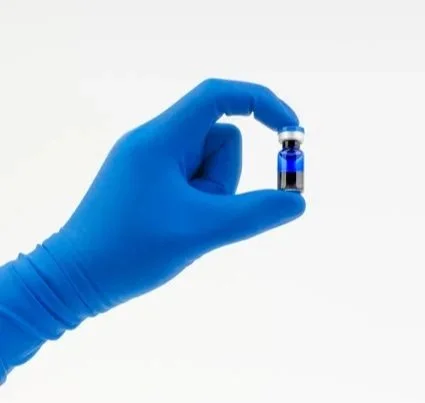
This an interesting area, and I’m excited to see what we learn, I’m just not familiar with any solid data. And even though we refer to this as micro-dosing, you might want to remember, this is still supraphysiologic dosing, meaning far higher amounts of GLP-1 or GIP activation than would be produced by the naturally occurring incretins.
In practice, I have seen people who are not obese or metabolically unhealthy, but who have carried frustrating, stubborn weight for years explore this approach. For some, there are significant changes toward body composition goals at low doses. And maybe even more importantly, there is a change with a longstanding and complicated relationship with food, a sort of quieting of the ‘food noise’ that previously ran their days.
I'm not opposed to this conversation, I think it can be a reasonable, more cautious option for the right person. But again, "reasonable" here means going in with an understanding of just how thin the data is. Just because millions of people are using these drugs in such a way, it doesn’t mean we actually know all the physiology or downstream effects.
So Where Does That Leave You?
If you already know excess fat is working against you, your labs confirm this, your joints feel it, or your energy shows it, then this may be a tool worth considering. If you're metabolically healthy and just want to look or feel a bit leaner, this can still be a reasonable conversation to have, but it's one that needs an honest accounting of what we don't yet know, not just enthusiasm for what's working for everyone around you.
Either way, the place to start isn't a drug, it's understanding where you actually stand. Schedule time with us to look at your labs and talk through your goals, and we'll figure out what makes sense for your biology specifically, not just for the cultural moment we're all living through right now.